Is Tucson Really the Astronomy Capital of the World?
The evidence behind the slogan: the 1972 dark-sky law, DarkSky International's HQ, the ring of research peaks, mirrors cast under a stadium — and what a visitor can actually touch.
Cities collect slogans the way deserts collect heat, so “astronomy capital of the world” deserves an audit rather than a shrug. Verdict up front: the claim holds better than most city slogans on Earth — and unusually, a visitor can go touch the evidence.
The exhibits, in order of weight
Exhibit one: the law. In 1972 Tucson became the first city anywhere to legislate against light pollution — not as green virtue but as industrial policy, protecting the telescopes that give the region its scientific weight. The code has been tightened for five decades since, most recently in 2024. Fly in at night and you can see the verdict: a metropolitan area of a million people that glows amber and dim instead of blue-white.
Exhibit two: the institutions. DarkSky International — the body that certifies dark-sky places worldwide — is headquartered in Tucson, where it was founded by astronomers in 1988. The University of Arizona is a global heavyweight in optical science, and its mirror lab famously casts giant telescope mirrors under the east wing of the football stadium — spinning furnaces beneath the bleachers.
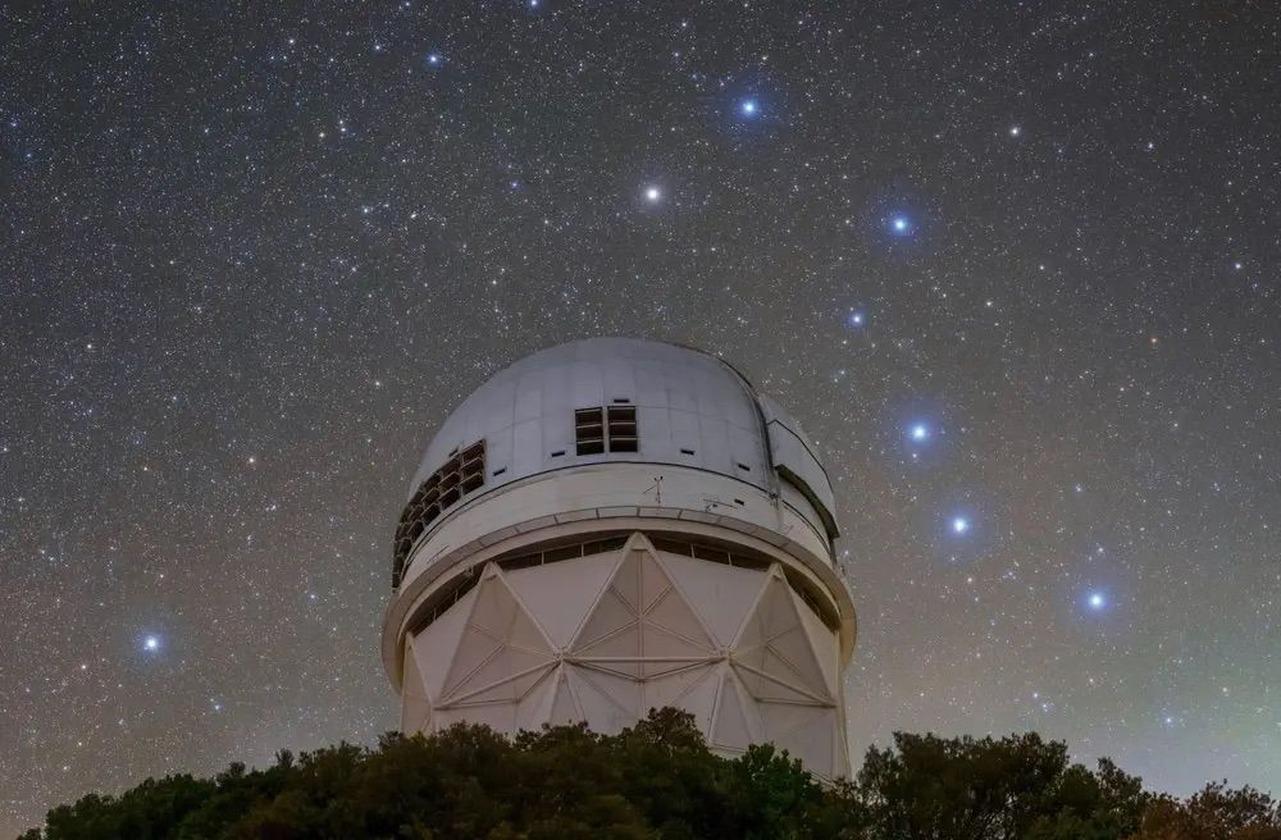
Exhibit three: the mountains. A ring of research summits surrounds the city — with the national observatory’s roughly two dozen telescopes on Kitt Peak as the flagship — plus the university’s public outpost on Mt Lemmon. Few cities on Earth have more working research telescopes within a 90-minute drive.
Exhibit four: the sky itself. Saguaro National Park, on the city’s own edge, is a certified Urban Night Sky Place — the world’s ninth — which is the certifying body’s way of saying the city’s discipline actually works.
What a visitor can touch
This is where Tucson beats its rivals: the capital is open. You can stand inside a working research telescope on a $24.95 daytime tour, spend a $59–$109 evening at a national observatory’s eyepieces — bookable with free cancellation —
watch a planetarium show for about $15, and drive twenty minutes to legally protected dark sky for nothing. The competing claimants run deeper science in places (Hawai’i’s summits, Chile’s Atacama) but almost none of it is walkable by the public; Tucson’s unique card is density of astronomy a civilian can actually enter.
The honest asterisks
Fairness requires them: the world’s biggest single instruments are elsewhere; the McMath–Pierce — for fifty years the world’s largest solar telescope — was decommissioned in 2017; and a June 2022 wildfire, the Contreras Fire, burned four support buildings on Kitt Peak’s flanks. The capital has scars and rivals. But as the place where law, institutions, mountains and public access stack in one valley — the slogan survives its audit. Start with the open-to-the-public table, and pick your night with the best-time guide.
Can't Make These Dates?
Browse More Available Options
Find a tour that fits your schedule — all with instant confirmation and free cancellation.
The capital, culturally
The slogan also survives at street level, which is where most capitals fail. Tucson converted its municipal streetlights to shielded, dimmable LEDs in a program dark-sky advocates cite as a model — the city literally turned itself down for the telescopes. The optics cluster around the university runs deep enough that the region wears the nickname “Optics Valley”: the science is an employer here, not a visitor. And the culture shows in small ways a traveller notices — amber porch lights in the foothills, star parties on school calendars, a football stadium with telescope mirrors curing beneath it. Capitals are places where the thing is ordinary; in Tucson, world-class astronomy is Tuesday.
Book Tucson's Big Sky Night
The national observatory's premium Dark Sky Discovery night — $109 with free cancellation to 24 hours, confirmed by the observatory at noon on the day.
Check Availability